If you are finishing BCA or a B.Sc in Computer Science this year, you have probably heard the same advice from everyone: do an MCA or start working. The honest answer is that it depends on what kind of software job you want. Two years of MCA changes which doors open for you, especially in product companies, data roles, and higher education. Here is how MCA admission actually works for the 2026-27 session in India and Uttar Pradesh: the exams, the eligibility, the fees, and the careers on the other side.
What MCA is now
MCA, the Master of Computer Applications, used to be a three-year degree. Since the revised AICTE curriculum it is a two-year postgraduate programme of four semesters, built for graduates who want to go deeper into software engineering, databases, operating systems, cloud computing, machine learning, and a full final-semester industry project. It is the standard second degree for BCA graduates the way an MBA is for BBA graduates.
The degree matters most in three situations. If your UG college had weak placement and you want a second shot at campus recruiting. If you want to move into data science, AI, or systems roles where employers prefer a master's. And if you are considering research, teaching, or a PhD later, where the postgraduate degree is the entry ticket.
The NIMCET route: NITs and IIITs
The national gateway to MCA at premier institutes is NIMCET, the NIT MCA Common Entrance Test. For the 2026 session it was administered by NIT Tiruchirappalli and covered 11 NITs and 2 IIITs. Around 25,000 students appeared for roughly 1,285 seats, so this is genuinely competitive.
The 2026 cycle ran like this: applications opened March 3, 2026 and closed May 1 (extended to May 5), the computer-based test was held June 6, 2026 from 2 pm to 4 pm, results came out June 29, and centralised counselling began June 30. The exam pattern is fixed: 120 multiple-choice questions over two hours for 480 marks, with +4 for a correct answer and -1 for a wrong one. The sections are Mathematics (50 questions), Analytical Ability and Logical Reasoning (40), Computer Awareness (10), and General English (20).
Eligibility for NIMCET is stricter than most people expect. You need Indian nationality, a bachelor's degree with at least 60% marks or 6.5 CGPA (55% or 6.0 CGPA for SC, ST, and PwD candidates), and Mathematics or Statistics as a subject in your UG programme. B.E. and B.Tech graduates are also eligible. There is no age limit, and final-year students can apply. The application fee was Rs. 2,500 for General, OBC, and EWS candidates and Rs. 1,250 for SC, ST, and PwBD candidates.
The UP route: CUET-PG and UPTAC counselling
For MCA seats at AKTU-affiliated colleges and private universities in Uttar Pradesh, the route runs through CUET-PG followed by UPTAC counselling. The CUET-PG 2026 result was declared on April 24, 2026, and UPTAC MCA counselling rounds ran through June to August 2026. Eligibility here is more relaxed than NIMCET: graduation with Mathematics at the 10+2 or graduate level and a minimum of 50% marks (45% for reserved categories) is the standard bar at most UP colleges.
Many private universities, including schools like the one at IFTM, also admit MCA students directly on graduation merit, so students who missed the entrance exam cycle can still apply. The lesson for 2027 aspirants is simple: NIMCET registrations open in early March, and missing that window closes the NIT route for the year.
What it costs
MCA fees in UP span a wide range, and knowing the brackets saves you from sticker shock at admission time.
- AKTU-affiliated private colleges: around Rs. 1,50,000 total for two years at Allenhouse Institute of Technology, Kanpur (Rs. 75,000 per year, NAAC B+). Inderprastha Engineering College, Ghaziabad charges about Rs. 2,47,000 total including registration and other charges.
- Larger private universities: Galgotias University, Greater Noida lists MCA fees around Rs. 2,64,300 total; Amity University, Lucknow around Rs. 4,40,000 total; Sharda University around Rs. 4,66,350.
- Online MCA: UGC-recognised online programmes from UP universities run as low as Rs. 57,000 to Rs. 60,000 total, which is worth knowing if you plan to work alongside the degree.
- NITs: around Rs. 2.46 lakh total at NIT Trichy, which is the best value-for-money MCA in the country given the placement outcomes.
Hostel is almost always extra. At the AKTU-affiliated colleges it typically runs Rs. 58,000 to Rs. 1,05,000 a year depending on the room type. UP domicile students with family income below Rs. 2 lakh a year are eligible for state government scholarships, which several colleges explicitly mention in their fee documents.
What you can do after MCA
The career map after MCA is broader than most students realise, and it is not limited to writing code.
- Software development: the default route. Application developer, backend engineer, full-stack developer at IT services firms and product startups. Industry listings commonly report entry salaries of Rs. 5 to 8 lakh per year for freshers from decent programmes.
- Data and AI roles: data analyst, ML engineer, and BI developer positions are increasingly MCA-friendly, especially if you pick electives in data science and cloud computing during the degree.
- Systems and infrastructure: systems analyst, database administrator, network administrator, and DevOps roles. Less glamorous than AI, but steady and well-paid.
- Government and teaching: NIC scientist posts, banking IT officer exams, and assistant professor eligibility (with NET) all accept MCA as the qualifying degree.
- Higher studies: a two-year MCA is a valid base for a PhD in computer science or applications.
One data point worth quoting: Galgotias University reports average MCA packages of 6-7 LPA with top recruiters including Infosys and Wipro. Outcomes vary a lot by college and by the student's own project work, so treat placement figures as a signal, not a promise.
MCA or job after BCA: how to decide
Take the job if you have a concrete offer from a company where you will write real code. Two years of industry experience at 22 beats a degree in most hiring decisions. Do the MCA if your UG placement options were thin, if you specifically want data science or AI roles that screen for a master's, or if you want the NIT tag, which still carries real weight in Indian IT hiring. The worst option is drifting: joining an MCA programme as a backup while not preparing for either placements or exams.
The practical checklist
- Check the maths requirement before anything else. NIMCET needs Mathematics or Statistics in your UG degree; most UP colleges accept it at the 10+2 level too.
- If you are aiming at NITs, the 60% aggregate rule is non-negotiable. Plan for it from the first year of your UG.
- Get the fee schedule in writing: tuition, exam fees, hostel, and mess are billed separately almost everywhere.
- Ask where the final-semester project happens. A college that places students in real industry projects is worth more than a cheaper one that does not.
- For 2027 aspirants: NIMCET applications open around early March each year, and CUET-PG results typically arrive in April.
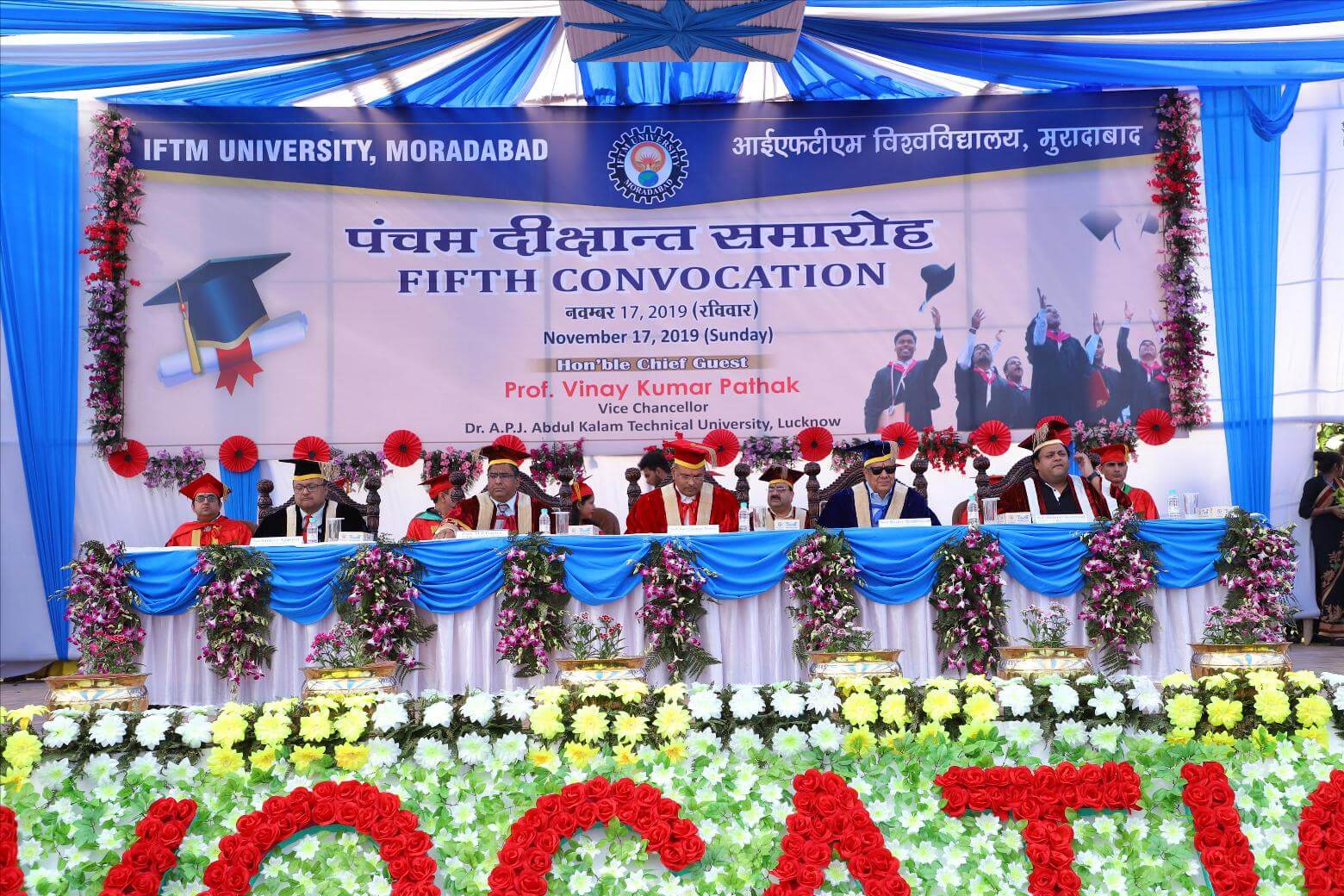
IFTM University's School of Computer Science and Applications runs MCA alongside its BCA and B.Sc Computer Science programmes, with merit-based admission for graduates who meet the eligibility criteria. If two more years of serious computer science fits your plan, the admission office can walk you through the fee structure, specialisations, and placement setup in one visit.