Agriculture employs roughly 45 percent of India's workforce, yet fewer than one in fifty agriculture students ever takes the subject seriously as a science. B.Sc Agriculture is changing that equation. It is a full science degree covering genetics, soil chemistry, entomology, and agricultural economics that ends with a career track most students never hear about: government agricultural officers, agri-tech startups, NABARD, and research institutes. If you are in Moradabad or anywhere in western UP and weighing options after Class 12, here is what the 2026 admission picture looks like, using IFTM University's programme as the reference point.
The degree in one paragraph
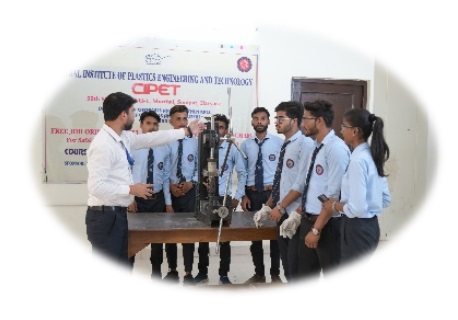
B.Sc (Hons) Agriculture is a four-year, eight-semester full-time undergraduate programme. IFTM University offers it through its School of Agricultural Sciences and Engineering in Moradabad. The curriculum follows the ICAR (Indian Council of Agricultural Research) framework: agronomy, soil science, plant breeding and genetics, horticulture, entomology, plant pathology, and agricultural economics. Theory is only half of it. Field work, laboratory sessions, and the RAWE module — Rural Agricultural Work Experience, a full semester spent working in villages with farmers — are built into the programme, along with internships for industry exposure.
Eligibility for 2026
Admission is based on Class 12 (10+2) performance. The standard requirements across most universities:
- Class 12 with Physics and Chemistry, plus one of Biology, Mathematics, or Agriculture as the third science subject. PCB, PCM, and PCMB streams all qualify; many universities also accept the agriculture vocational stream.
- Minimum 50% aggregate for General and OBC candidates, with a 5-10% relaxation for SC, ST, and reserved categories. Some institutions set the bar at 55-60% for general category seats.
- Minimum age of 16-17 years in the admission year; ICAR recommends 16. Students awaiting Class 12 results can apply, subject to meeting the criteria when results are declared.
IFTM conducts merit-based admission primarily on Class 12 performance, without a separate entrance exam for this programme. Central and ICAR-allotted seats elsewhere are filled through CUET UG scores, and state agricultural universities run their own CETs — so the entrance question depends on where you apply, not on the degree itself.
Fees: what to expect
CollegeDunia lists IFTM's B.Sc (Hons) Agriculture at Rs. 2,00,000 for the full four years — Rs. 50,000 per annum — plus an annual exam fee of Rs. 10,000. GetMyUni reports a total of Rs. 1.68 lakh for the programme. The difference between aggregators is normal; they update at different times. Nationally, private-university fees for the degree run Rs. 50,000 to Rs. 1,50,000 per year, while government agricultural universities charge Rs. 20,000 to Rs. 60,000. Always confirm the current figure on the university's official fee page or admission office before paying anything.
For context: UP's state scholarship schemes and the central post-matric scholarship programmes cover a significant share of tuition for eligible OBC, SC, ST, and minority students. If you qualify, file the scholarship application in the same window as admission — missed deadlines are the most common reason students pay full fees they did not need to pay.
What you actually study
The first year covers foundations: fundamentals of agriculture, soil science, horticulture basics, agricultural meteorology. The second year moves into crop production, genetics, microbiology, and farm machinery. Third year adds plant breeding, agricultural economics, pest management, and irrigation. The final year is the practical peak: RAWE field training, internships, and project work. The skills it builds are concrete — scientific crop planning, soil and nutrient management, pest and disease control, farm machinery operation, and agribusiness management.
That blend of science and field practice is the degree's real selling point. Graduates do not just know plant genetics; they know what a farm looks like when the monsoon fails.
Careers: government, private, and the startup track
Starting salaries typically fall between Rs. 2.5 and Rs. 6 lakh per annum, rising to Rs. 4-10 lakh in agri-tech and corporate roles. The career lanes break down three ways:
- Government and public sector: the degree is the direct qualification for Agriculture Development Officer (ADO) posts in state agriculture departments. It also opens doors at NABARD, public sector banks (agricultural field officers), ICAR institutes, the Food Corporation of India, and Krishi Vigyan Kendras.
- Private agribusiness: seed companies, fertiliser and agri-input firms, food processing companies, and farm equipment manufacturers recruit actively. Recruiters range from Hindustan Unilever and BigBasket to the NDDB.
- Agri-tech and entrepreneurship: drones for crop monitoring, AI-based soil and yield analytics, precision farming, and organic produce startups. This is the fastest-growing lane, and it rewards graduates who combine the degree's science with basic digital skills.
Higher studies are a serious option too: M.Sc in genetics and plant breeding, vegetable science, or agronomy — IFTM itself runs these — or an MBA in agribusiness for the management track.
Who should apply
The degree suits three kinds of students. Science students who want a respected, job-linked career without fighting the NEET bottleneck. Students from farming families in western UP who want to professionalise what they already know. And anyone drawn to the mix of biology, technology, and field work that agri-tech now demands.
IFTM's programme admits roughly 80-100 students a year. For the 2026-27 session, applications are expected around August, with merit lists and counselling following — but the university has not published exact dates yet. If this is on your shortlist, keep an eye on the official admission page and have your Class 12 documents ready. The students who lose seats are not the ones with lower marks; they are the ones who check the notice board a week late.